
10 Signs That You Need To Replace Your Air Conditioner

Major Benefits
Your air conditioner keeps your home comfortable through scorching Victorian summers, but like all appliances, it won't last forever. The tricky part is knowing whether your struggling unit needs a quick fix or a complete replacement. Many homeowners spend hundreds on repairs that merely delay the inevitable, when replacing the system would have been the smarter choice all along.
The difference between a repair and a replacement decision often comes down to recognising the right warning signs early. Some problems can be fixed affordably. Others indicate your system is genuinely nearing the end of its usable life. This guide helps you distinguish between the two, so you can make an informed decision that protects both your comfort and your wallet.
Table of Contents
- 10 Signs Your Aircon Needs Replacement
- Your Energy Bills Keep Increasing
- Your Air Conditioner Is More Than 10-15 Years Old
- Frequent & Expensive Repairs
- Some Rooms Feel Too Hot or Too Cold
- Your System Makes Strange Noises
- The Air Conditioner Struggles During Extreme Weather
- Your Air Conditioner Isn’t Responding Properly to Temperature Settings
- There's Excess Moisture Or Leaks
- Persistent Bad Smells That Won't Go Away
- Your Home Comfort Has Changed
- Should You Replace or Repair Your Air Conditioner and Why?
- What to Consider When Replacing Your Air Conditioner
- Conclusion
- Frequently Asked Questions

One of the first hints that your air conditioner is losing efficiency is a noticeable climb in your electricity bills. If you're paying more to cool your home despite not changing your thermostat settings or usage habits, your system is likely working harder than it should.
Older air conditioning units lose efficiency gradually over time. The compressor, which is the heart of the system, consumes more electricity as internal components wear out. Instead of cooling your home quickly, the system runs longer, cycling on and off more frequently. This extended run time shows up immediately on your power bill.
In Victoria, where summer temperatures regularly exceed 35 degrees Celsius, this inefficiency translates into hundreds of dollars in unnecessary annual costs.
Modern reverse-cycle air conditioning systems are dramatically more efficient. They use advanced inverter technology, which means the compressor adjusts its speed based on cooling demand rather than running at full power constantly. This variable-speed operation can reduce energy consumption by 40 per cent or more compared to older fixed-speed systems.
When you factor in rising electricity prices across Victoria, upgrading to an energy-efficient system becomes financially logical. The money you save on power bills often pays for the new system within a few years, particularly if you're currently operating a unit from the early 2000s or earlier.
According to industry standards, the typical lifespan of an air conditioning unit is between 10 and 15 years. If your system is approaching or exceeding this age range, replacement should seriously be on your radar.
Even if the unit technically still works, older systems usually struggle to compete with modern energy-efficient models.
There are several reasons for this:
- Ageing compressors become less efficient
- Internal parts wear out
- Motors lose performance
- Refrigerant systems deteriorate
- Older technology consumes more power
Another major issue is outdated refrigerants.
Many older systems used R22 refrigerant, which has been phased out due to environmental concerns. That means repairs involving refrigerant leaks or compressor issues can become expensive because replacement refrigerants and compatible parts are harder to source.
Older systems also miss out on modern features that improve comfort and efficiency, including:
- inverter technology
- Zoning controls
- Smart thermostats
- Wi-Fi operation
- Occupancy sensors
- Improved airflow management
A 15-year-old system may still cool your home, but it’s likely doing it far less efficiently than a newer model.
One repair might be a coincidence. Two in a season could be bad luck. But if you find yourself calling a technician multiple times a year, your system is telling you something important — it is becoming genuinely unreliable.
What makes this worse is how quickly repair costs add up without homeowners realising it. A $300 call-out here, a $450 part replacement there, and suddenly you have spent over $1,200 in a single year on a system that still is not working properly. At that point, the numbers stop making sense.
The situation becomes even clearer when major components start failing. Compressor replacements, evaporator coil repairs, PCB board failures and refrigerant system issues are among the most expensive fixes in air conditioning, and they become increasingly common as a system ages past the 10-year mark. A widely used guideline among HVAC technicians is the 50 per cent rule: if your repair bill approaches half the cost of a new system, replacement is almost always the smarter investment. Patch repairs buy time. They rarely buy reliability.
Uneven temperatures are another major warning sign.
If one room feels freezing while another stays warm and uncomfortable, your air conditioner may no longer be distributing air properly.
This can happen due to:
- Failing blower motors
- Damaged ductwork
- Poor airflow
- Ageing compressors
- Incorrect system sizing
- Blocked vents
- Deteriorated insulation in ducts
In many older homes across Victoria, systems were originally sized for different lifestyles. A home that once had occasional daytime occupancy may now have family members working from home all week, increasing cooling and heating demands significantly.
Sometimes the issue is not that the system is broken. It’s simply no longer suitable for the way the home is being used.
Proper sizing matters more than many homeowners realise.
According to Australian government guidance, choosing the right-sized heating and cooling system helps reduce unnecessary energy use and running costs. Systems that are too small struggle continuously, while oversized systems cycle inefficiently and waste electricity.
If your home comfort has become inconsistent, replacement may provide a much better long-term solution than constant adjustments and repairs.
A well-functioning air conditioner operates with a steady, gentle hum. You should barely notice it's running. When unusual sounds emerge, something inside the system is deteriorating.
Different noises indicate different problems. A grinding sound typically means mechanical components inside the compressor are wearing or metal parts are rubbing against each other. This is a serious indicator of imminent failure. Buzzing often signals electrical issues, loose wiring or a failing capacitor. Clicking might mean a relay switch is sticking, whilst rattling suggests loose panels, debris or components coming loose within the housing.
Some of these noises correspond to repairs that can extend system life. A technician can tighten loose panels, clean debri,s or replace a failing capacitor. However, grinding sounds almost always indicate compressor damage, which is expensive to repair and rarely solves the underlying wear pattern. Once a compressor starts grinding, complete failure usually follows within months.
The key distinction is this: occasional unusual sounds that a technician can quickly identify and fix are one thing. Persistent, worsening noises, particularly grinding, are clear signs your system is reaching the end of its functional life.
Victorian summers bring regular heatwaves where temperatures soar above 40 degrees Celsius. During these peak periods, your air conditioner reaches maximum workload. It's precisely when you need it to perform flawlessly that an ageing system often fails.
As air conditioning units age, they lose the ability to maintain adequate cooling when ambient temperatures are extreme. Instead of reaching your target temperature within a reasonable time, the system runs continuously but barely keeps pace. Your home stays uncomfortably warm. The thermostat never quite reaches satisfaction. The system cycles endlessly but provides insufficient cooling.
This happens because high external temperatures make the heat transfer process more difficult. The outdoor condenser unit must reject heat into already-hot air, which is thermodynamically challenging. Newer systems handle this challenge through improved compressor design, better heat exchanger efficiency and variable-speed motors that optimise performance under stress.
You set the temperature to 22°C, but the home still feels warm. Or maybe the system switches on randomly, shuts off too early or never reaches the temperature you selected.
In many older air conditioners, thermostat and control issues become more common over time. Sensors can become inaccurate, electrical connections may weaken, and older systems can struggle to communicate properly between the thermostat and the unit itself.
Some homeowners also notice that:Thee display temperature doesn’t match the room feel,
- certain rooms remain uncomfortable,
- or the system behaves unpredictably throughout the day.
While thermostat recalibration can sometimes solve the issue, recurring control problems in an ageing system may indicate broader deterioration within the air conditioning setup
Water leaks and strange smells should never be ignored.
Some moisture around an air conditioner may simply indicate a blocked drain line or condensation issue. But persistent leaks can also signal more serious internal problems.
Common warning signs include:
- Water pooling near the unit,
- Mouldy smells,
- Musty airflow,
- Excessive humidity indoors,
- Visible mould near vents,
- Chemical-like odours.
These issues may be linked to:
- Clogged drainage systems,
- Deteriorating insulation,
- Mould growth inside ducts,
- Refrigerant leaks,
- Failing evaporator coils.
If moisture and leaks continue despite repeated servicing, replacement may be the safer and more effective long-term solution.
A well-functioning air conditioner should produce no noticeable smell. When yours pushes out musty, stale or burning odours, the air circulating through your home has a problem worth addressing.
Musty smells typically indicate mould or bacteria growing on the evaporator coil or inside ductwork. Once established, basic filter cleaning rarely solves it; the smell returns within days because the source sits deeper inside the system.
A burning or metallic smell is more urgent. It points to overheating electrical components or deteriorating wiring. Switch the system off and call a technician promptly.
In older systems, persistent odours after professional servicing signal that internal components have deteriorated beyond what cleaning can fix. Modern reverse cycle units use advanced filtration and antimicrobial coil coatings specifically to prevent this. If your system leaves rooms smelling stale the moment it switches on, no service call will solve what a replacement can.
Your air conditioning needs today are probably not what they were when your current system was installed , nd that gap matters.
Perhaps you now work from home, meaning the system runs for 12-18 hours instead of 8-10 hours. Perhaps your family has grown, adding more bodies, more heat and more demand. Renovations may have opened up walls, added an extension or created a home office in a room that previously sat empty all day. Each of these changes increases the load on a system that was sized and specified for a different version of your life.
An air conditioner that handled a quiet household in 2010 can struggle to keep pace with a busy family home in 2026. It is not necessarily broken. It simply no longer fits. And fitting your system to your actual lifestyle rather than running an undersized unit at its limit year after year is both more comfortable and more economical in the long run. Replacement allows you to right-size properly from the start.
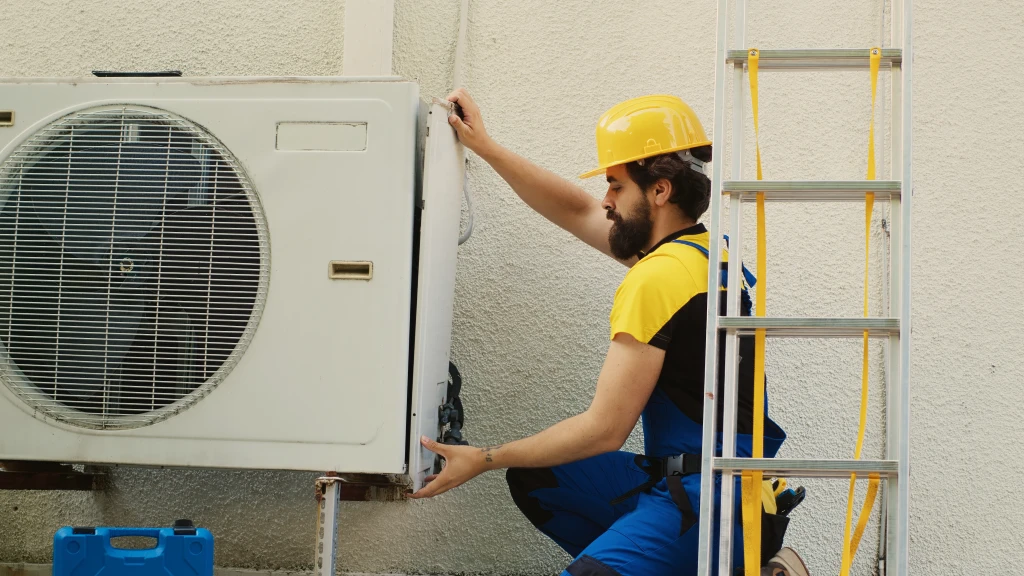
The decision between repair and replacement ultimately depends on three factors: age, repair cost and reliability.
Choose repair if: Your system is under 5 years old, the repair costs less than 30 per cent of a new system's price, and the system has been reliable overall. A failing capacitor, compressor contactor or blower motor bearing on a relatively young unit warrants professional repair.
Choose replacement if: Your system is over 10 years old, repair costs exceed 50 per cent of a new system's price, the unit has needed multiple repairs recently, or it's failing to meet your current cooling needs. Replacement provides reliability, modern efficiency, current features and peace of mind through a manufacturer's warranty.
Consider replacement even on younger systems if: They use R-22 refrigerant and need recharging, the compressor is failing, the system has never worked properly due to poor installation or sizin,g or it no longer suits your lifestyle and home configuration.
The key insight: repairs keep an old system limping along. Replacement invests in years of reliable operation with modern efficiency, features and environmental responsibility.
Choosing a replacement system requires understanding several important factors. This is where proper expertise genuinely matters, because the wrong choice leads to years of regret.
1. Choose the Right System Type
Here are the types of systems you can choose from :
1. Multi-head split systems
Multi-split air conditioners in Australia provide flexibility by connecting multiple indoor units to a single outdoor compressor. This lets you cool different areas independently, managing temperature zone by zone. You might have the main living area at 22 degrees whilst bedrooms run cooler at 20 degrees, saving energy by not cooling unoccupied spaces.
2. Ducted reverse-cycle systems
Ducted reverse-cycle air conditioner in Australia cool your entire home through existing ductwork. They're ideal if you already have ducts (typically from heating systems). Modern ducted systems offer zoning capabilities, so you close vents in unused rooms and focus cooling where it's needed. They're less visible than wall units because the system sits in the roof or under the house.
Choose the system type based on your home's structure, existing infrastructure and whether you want whole-home cooling or zone-based control. An accredited provider like EcoOrigin can assess your specific situation and recommend the best option.
2. Energy Efficiency Ratings
Air conditioning efficiency is measured using two key metrics: EER (Energy Efficiency Ratio) for cooling performance and COP (Coefficient of Performance) for heating performance. When comparing two systems of similar capacity, always prioritise higher EER and COP values over other features. The efficiency difference translates directly into dollars saved on your electricity bills every summer and winter for the next 15 years.
3. Correct System Sizing
This cannot be overstated: proper system sizing is crucial. An undersized system runs constantly and never reaches the target temperature. An oversized system short-cycles (turns on and off frequently), which wastes energy and wears components faster.
Professional sizing involves calculating your home's cooling load. Factors include square footage, insulation levels, window area and orientation, outdoor summer temperatures, how many people typically occupy the space and whether you have shading from trees or neighbouring buildings. This ensures you get a system that reaches target temperature efficiently without overshooting, wasting energy or underperforming.
To know more about choosing the right size of air conditioner, read this blog.
4. Smart Features Worth Considering
- Wi-Fi control: It lets you adjust the temperature from your smartphone before arriving home, ensuring the house is comfortable when you arrive. You can schedule different temperatures for different times or days, adapting to your routine.
- Zoning: It lets you close vents in unused rooms and concentrate cooling where people are actually present. This reduces energy consumption significantly in homes with varied occupancy patterns.
- Sensors: It can detect whether rooms are occupied, adjusting the temperature accordingly. Some systems have sleep modes that gradually increase temperature at night, when lower settings aren't needed, saving energy overnight.
- Inverter technology: It adjusts the compressor's speed based on cooling demand. When you need light cooling, it runs slowly. During peak demand, it runs faster. This variable operation is far more efficient than older systems that run at constant speed regardless of how much cooling is actually needed.
These features add cost ,but for homeowners who value convenience and want to maximise energy savings, they're worth the investment.
5. Noise Levels
Modern systems are significantly quieter than older models. Indoor units are nearly silent when running. Outdoor compressor units produce some noise, typically 50 to 65 decibels, which is about as loud as normal conversation.
If noise is a concern, check decibel ratings when comparing units. Premium models operate at the quieter end of the range. Also consider placement. Positioning the outdoor unit away from bedrooms or neighbours' properties minimises noise impact.
6. Warranty Coverage
Quality systems come with manufacturer warranties covering parts and labour for 5 to 10 years, depending on whether you're the original owner and whether you've maintained the system professionally.
Warranty is important because it protects your investment if components fail prematurely. Reputable manufacturers stand behind their products. Budget brands might offer cheaper systems, but with shorter, more limited warranty coverage.
7. Installation Quality
Even the best air conditioning system performs poorly if installation is inadequate. Proper installation requires correct refrigerant charging, proper ductwork sealing, appropriate system placement and careful electrical connection.
Work with licensed, accredited installers who've completed formal training and adhere to Australian standards. Poor installation voids warranties, reduces efficiency and leads to reliability problems. In fact, if the compliance is not maintained, you can lose the Victorian energy rebate that can get you a reverse cycle air conditioner at a much discounted price.
Your air conditioner won't last forever, but recognising the right replacement signals ensures you make the upgrade at the optimal time rather than when the system fails unexpectedly during a heatwave.
The 10 signs covered here paint a picture of a system in decline. Energy bills climbing, frequent repairs, unreliable cooling, unusual noises and inability to handle extreme weather all indicate genuine problems that repair simply delays rather than solves.
If your system is over 10 years old and showing several of these signs, replacement makes both financial and comfort sense. Newer systems run significantly more efficiently, operate more reliably, provide better features and cost less to maintain. If you need help in choosing the best air conditioner in Australia, you can refer to this blog.
The transition to replacement is also an opportunity. You can right-size your system for your current lifestyle, incorporate modern features like zoning and smart controls and choose an energy-efficient model that reduces your running costs for years to come. In Victoria, government rebates under the air conditioner rebate Victoria can reduce upfront costs by hundreds of dollars for eligible homes upgrading from gas heating or outdated air conditioning systems, making the financial case for replacement even stronger.
1. How do I know if I need a new air conditioner or just a repair?
If your system is relatively new and the issue is minor, a repair is often worthwhile. But if the unit is older, inefficient, breaking down frequently or requiring expensive repairs, replacement may make more financial sense.
2. What is the average lifespan of an air conditioner in Australia?
Most split system and ducted air conditioners last around 10 to 15 years, depending on usage, maintenance, installation quality and environmental conditions.
3. Is it worth repairing a 15-year-old air conditioner?
In many cases, no. Older systems are usually less energy efficient, more expensive to repair and more likely to develop additional problems after major repairs.
4. Do inverter air conditioners save electricity?
Yes. Inverter systems adjust output gradually instead of constantly switching on and off. This helps improve efficiency and reduce energy consumption.
5. Can I get rebates for replacing an old air conditioner in Victoria?
Eligible Victorian households may access discounts through the Victorian Energy Upgrades program when upgrading to more energy-efficient heating and cooling systems. Eligibility depends on the existing system and the replacement system.