
Hisense Air Q Premium 18kW Ducted Review
.webp)
Major Benefits
Well, in case the Hisense Air Q Premium Ducted 18kW has landed on your shortlist for a whole-home ducted system, you probably have a few genuine questions before you commit.
Is it actually efficient, or is that just marketing? Will it heat your home properly in winter, or is it really a cooling specialist? And how does it hold up against Daikin, Mitsubishi Electric or Fujitsu?
As a VEU-accredited installer, we quote and install this system regularly for Victorian homes, so this review is based on what we actually see on the tools, not a spec sheet rewrite. This quick guide has everything that you need to know before you invest in a system this size, including whether it qualifies for a Victorian energy rebate that can take a genuine chunk off the price.
Table of Contents
- Quick Summary
- Product Overview
- Specifications
- Key Features Explained
- How It Performs in Real Homes
- Installation
- Maintenance
- Warranty
- Pros and Cons
- Who Should Buy This
- Who Should Probably Look Elsewhere
- How It Compares to Daikin, Mitsubishi Electric, Fujitsu and ActronAir
- Can It Qualify for a Victorian Energy Rebate?
- Our Genuine Opinion
- Frequently Asked Questions
- Cooling: Genuinely strong for large Australian homes, backed by consistent reviewer feedback.
- Heating: Good, but not the class leader. Hisense doesn't publish an independently verified heating output figure for this exact model, so confirm it with your installer.
- Standout feature: HI-NANO plasma air purification, Sensitive Choice approved, useful for allergy and asthma sufferers.
- Warranty: 5 years standard, extended to 7 years for units purchased and installed by 31 July 2026 and registered by 31 October 2026.
- Price position: Generally more affordable than Daikin, Mitsubishi Electric or Panasonic at a similar capacity.
- Best for: Large homes, warmer or coastal climates, and households prioritising air quality alongside cooling.
- Victorian buyers: Replacing an old gas ducted heater could unlock a substantial Victorian Energy Upgrades (VEU) discount, so it's worth checking eligibility before you buy.
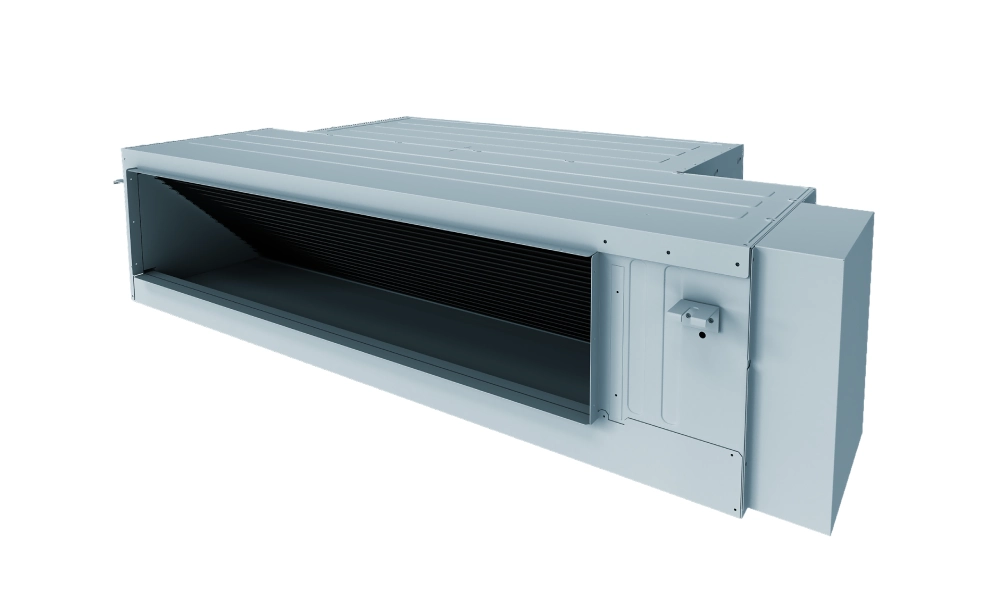
The Air Q Premium Ducted 18kW sits at the top of Hisense's residential ducted range in Australia. It's built for large homes that need one system to cover the whole house rather than room by room.
It's a high-static design, which simply means the indoor unit can push air through longer duct runs and more outlets without losing pressure. That is genuinely important if you have a big floor plan or several separate zones to cover.
The indoor unit (AUD-180U4RSH1) is paired with a matching outdoor condenser (AUW-180U4RZ1), and the system runs on R32 refrigerant, the standard, lower-emission refrigerant used across most modern Australian reverse-cycle systems. The outdoor unit uses a double-fan design and is DRED-compatible, meaning it can work with demand response technology if you're running solar or a smart meter at home.
A quick honest note here: Hisense doesn't publish an independently verified heating capacity figure for this specific 18kW model. Ask your installer or check the current Hisense product brochure for the precise heating output before you finalise your decision. We'd rather tell you that plainly than guess a number.
Manufacturer spec sheets tend to list features without explaining why they matter. Here's what each one actually means for your home.
Zone Control (up to 8 zones)
You don't have to heat or cool your whole house at once. If only two bedrooms are in use overnight, you can close off the rest of the home and direct airflow only where people actually are.
The 5% adjustment increments give you finer control than the basic on/off zoning found on cheaper systems, which should help keep running costs down over a full year.
HI-NANO air purification
This is Hisense's plasma ion technology, and it's a genuine point of difference on a ducted system. It's designed to reduce airborne bacteria, allergens and odours throughout the home rather than in a single room.
It's also the reason the range carries Sensitive Choice approval. If someone in your household has asthma or allergies, this feature is worth weighing seriously rather than dismissing as marketing.
Golden Fin anti-corrosion coating
The outdoor coil is coated to resist salt air and moisture, which matters if you live near the coast or in a humid climate. Corrosion is one of the more common reasons outdoor units fail early, so this is a practical feature, not a cosmetic one.
Wi-Fi and ConnectLife app control
This lets you adjust temperature, zones and scheduling from your phone, and geo-fencing can bring the house to temperature as you head home. It's genuinely useful, though the Wi-Fi module is often sold separately rather than bundled in, so confirm this with your quote.
Smart Self-Clean
The system runs a frost and defrost cycle to help clear dust and buildup from the indoor coil. It's a simple feature, but a practical one for keeping efficiency consistent over the years rather than letting performance quietly decline.
Dry contact input
This allows the system to integrate with other home automation or building management setups. It's more relevant for larger homes or light commercial use than a standard household.
Cooling Performance
This is where the Air Q Premium range genuinely shines. Independent reviewers have consistently rated Hisense's Air Q line highly for cooling efficiency and low indoor noise, and forum discussions among Australian owners back this up.
For a big, open-plan home in summer, this system should keep up comfortably. The large airflow design also means fewer hot spots in rooms further from the indoor unit.
Heating Performance
Heating is where you should set expectations a little more carefully. Independent reviews note that while Hisense's cooling numbers are strong, heating performance and long-term durability still trail the established premium brands.
That doesn't mean it heats badly. It means that if you live somewhere with genuinely cold winters and heating is your main use case, a Daikin or Mitsubishi Electric system might edge ahead on cold-climate heating output.
Energy Efficiency and Running Costs
Bigger ducted systems use more power than a single split, and an 18kW system is no exception. Real-world discussion among Australian ducted system owners suggests a system this size can draw several kilowatts per hour under full load, though this drops considerably once the home reaches its set temperature and the inverter ramps down.
The practical takeaway is simple: zone what you're not using and let the inverter do its job at part load. Your running costs should stay reasonable rather than blowing out.
Noise Levels
Hisense's smaller Air Q split systems have a strong reputation for quiet indoor operation, and the ducted range benefits from the same underlying inverter and fan technology. Ducted systems are generally quieter to live with day to day than a wall split anyway, since the indoor unit sits out of sight in the ceiling.
Outdoor unit noise will depend partly on where it's installed and how close it sits to bedroom windows, so it's worth discussing placement with your installer rather than assuming it away.
Because this is a high-static ducted system, installation is a bigger job than a simple split system swap. Here's what to expect once you've decided to go ahead.
The indoor unit needs a reasonably generous ceiling cavity, the ductwork needs to be sized properly for an 18kW system, and the outdoor unit is a genuine two-person lift given its size.
Expect a licensed installer to check your electrical supply, since a system of this capacity draws meaningful current and your switchboard may need attention if it's older.
Pipe runs of up to 75 metres and a 30-metre vertical difference give installers a fair bit of flexibility for larger or multi-storey homes, which is useful if your outdoor unit location isn't right next to the roof cavity.
Installation should always be done by a licensed refrigeration mechanic, both for safety and because an incorrect install can affect your warranty.
It's not a project to attempt yourself, and any reputable quote should include full commissioning, a leak test and a walkthrough of your zone controller once the job is done. If you'd like a hand with sizing and quoting a system like this for your home, our ducted air conditioning installation team can talk you through it.
Ducted systems are relatively low maintenance if you stay on top of the basics, and this one's no different. A little regular attention goes a long way over the years.
Filters should be cleaned regularly, probably every one to two months in dusty environments and a little less often otherwise, since a clogged filter is one of the most common reasons efficiency quietly drops over time.
The Smart Self-Clean function helps with the indoor coil, but it isn't a substitute for a professional service.
A yearly service from a licensed technician is a sensible investment, particularly for a system this size. It's a small ongoing cost that protects a genuinely large purchase, and it keeps your warranty claims straightforward if something does go wrong down the track.
Hisense's standard warranty on this ducted range is 5 years parts and labour. That's a solid, mainstream length that meets the minimum standard required under most state energy efficiency schemes.
At the time of writing, Hisense is running a promotional extension to 7 years for units purchased and installed between 19 October 2024 and 31 July 2026, provided you register the product online and submit your claim by 31 October 2026. That installation deadline is now less than a month away, so if the extended warranty matters to your decision, check directly with your installer or Hisense's warranty terms to confirm it's still current before you purchase.
Outside the promotional period, the standard 5-year warranty still applies and remains in line with industry norms for this category of system.
Pros
- Strong, genuinely competitive cooling efficiency for the price
- HI-NANO air purification is a real point of difference, useful for allergy and asthma sufferers
- Up to 8 zones with fine 5% airflow adjustment
- Wide ambient operating range suited to harsh Australian conditions
- Golden Fin coating helps in coastal or humid climates
- DRED compatible, useful if you're running solar
- Currently backed by an extended 7-year warranty, for a limited time
- Generally more affordable than Daikin, Mitsubishi Electric or Panasonic at a similar capacity
Cons
- Heating performance is good rather than class-leading
- Wi-Fi module and zone controller are often sold separately, which adds to the real cost
- Installation is more involved and typically pricier than a basic split system
- Hisense doesn't yet carry the decades-long specialist reputation of Daikin or Mitsubishi Electric in Australia
- Installer feedback on after-sales support is mixed, though Hisense has expanded its local service team in recent years
- Indoor unit stock can be limited at times, so confirm current availability with your dealer
This system suits larger Australian homes that need strong, even cooling across the whole house, especially in warmer states or coastal areas where the Golden Fin coating earns its keep.
It's a genuine option if someone in the household has allergies or asthma and you want the HI-NANO purification working in the background. It also makes sense if you want zone control and smart features without paying premium-brand prices, and if you're purchasing before the current extended warranty offer ends.
Victorian households replacing an old gas ducted heater should also factor in a possible VEU discount, which can lower the effective purchase price further.
If you live somewhere with long, cold winters and heating is genuinely your priority, it's worth comparing heating-specific figures against Daikin or Mitsubishi Electric before you decide.
If having a specialist HVAC brand with decades of Australian service history matters more to you than upfront price, that's also a reasonable reason to look elsewhere. And if you're not comfortable with a brand whose local support network, while growing, is still younger than the Japanese specialists, it's worth weighing that against the savings.
Well, no single brand wins every category. Daikin and Mitsubishi Electric are the safer, more expensive choice if brand history and after-sales service are your top priority. Hisense earns its place on the shortlist by offering strong cooling performance and genuinely useful features at a lower price point, provided you're comfortable with a brand that's still building its long-term Australian reputation.
Yes, it can. Under the Victorian Energy Upgrades (VEU) program, this unit is currently listed on the approved product register and comes standard with a 5-year warranty, both of which you need to qualify. If you're replacing a gas ducted heater that's more than 2 years old, you could get up to $5,530 off upfront, plus roughly $1,140 a year in ongoing bill savings.
A couple of things worth knowing: you can't apply for this rebate yourself. It has to go through an accredited installer, who applies the discount directly at the time of installation. And the actual dollar figure you get depends on the system size and current certificate prices, so it's worth asking your installer to show you the real number on your quote rather than relying on a headline figure.
We think the Hisense Air Q Premium Ducted 18kW earns its spot on a shortlist rather than being an automatic top pick. The cooling performance, air purification and feature set are genuinely good for the price, and the extended warranty currently on offer is a fair sweetener while it lasts.
Also, if you're purchasing the Hisense Air Q Premium Ducted 18kW in Victoria and replacing an old gas ducted heater, it's worth checking your eligibility for a Victorian energy rebate before you finalise your quote, since it can meaningfully change the maths on a purchase this size. For a second opinion on eligibility or a full comparison of VEU-approved systems, getting in touch with EcoOrigin before you buy is a sensible last step.
1. Who is the Hisense Air Q Premium Ducted 18kW best suited for?
Larger homes, warmer or coastal climates, households with allergy or asthma concerns, and buyers who want strong features without paying premium-brand prices.
2. Is the Hisense Air Q Premium Ducted 18kW noisy? I
Well, the indoor operation is generally quiet, in line with Hisense's Air Q reputation. Outdoor noise depends partly on installation placement, so discuss this with your installer.
3. How much does the Hisense Air Q Premium Ducted 18kW cost to run?
It uses more power than a small split under full load, but the inverter brings consumption down considerably once your home reaches temperature. Sensible zoning keeps costs reasonable.
4. Is the Hisense Air Q Premium Ducted 18kW better than Daikin or Mitsubishi Electric? Daikin and Mitsubishi Electric generally lead on long-term reliability, reputation and heating performance. Hisense competes well on cooling efficiency, features and price.
5. Does the Hisense Air Q Premium Ducted 18kW need a separate Wi-Fi module?
Yes, in most cases. The ConnectLife Wi-Fi module is often sold separately rather than bundled in, so confirm this on your quote if remote scheduling and geo-fencing matter to you.
6. Is zone control worth it on the Hisense Air Q Premium Ducted 18kW?
For most homes, yes. Being able to close off unused rooms is one of the simplest ways to reduce running costs on a system this size.