
Inverter vs Non-Inverter Air Conditioner: A Detailed Guide
Major Benefits
Every split system you look at falls into one of two categories: inverter or non-inverter. That single difference changes your running costs, your comfort and how much you pay for the unit itself.
An inverter aircon adjusts its output to match the room. A non-inverter aircon switches fully on, then fully off, using more power each time it restarts. This guide compares both technologies honestly, shows you which one suits your household and explains how the Victorian air conditioner rebate can lower the cost of upgrading to a high-efficiency reverse cycle system through the split system rebate Victoria offers under the Victorian Energy Upgrades program.
Quick Summary
- Inverter air conditioners use a variable-speed compressor that adjusts output to match demand, rather than switching fully on and off.
- Non-inverter units are cheaper to buy but generally cost more to run over time.
- Most modern split systems sold in Australia are inverter air conditioners, according to Sustainability Victoria.
- The Victorian Energy Upgrades program offers discounts on eligible reverse cycle air conditioners worth up to $1,610 off the upfront cost, per Victorian Energy Upgrades.
- Star ratings on the Zoned Energy Rating Label help you compare running costs between models before you buy.
- The right choice depends on your budget, how often you use the system and your household's energy goals.
Table of Contents
- What Is an Inverter Air Conditioner?
- What Is a Non-Inverter Air Conditioner?
- Inverter Air Conditioner vs Non-Inverter Air Conditioner: A Detailed Comparison
- Inverter or Non-Inverter Air Conditioner: How To Make The Best Choice?
- Bringing It All Together
- Frequently Asked Questions
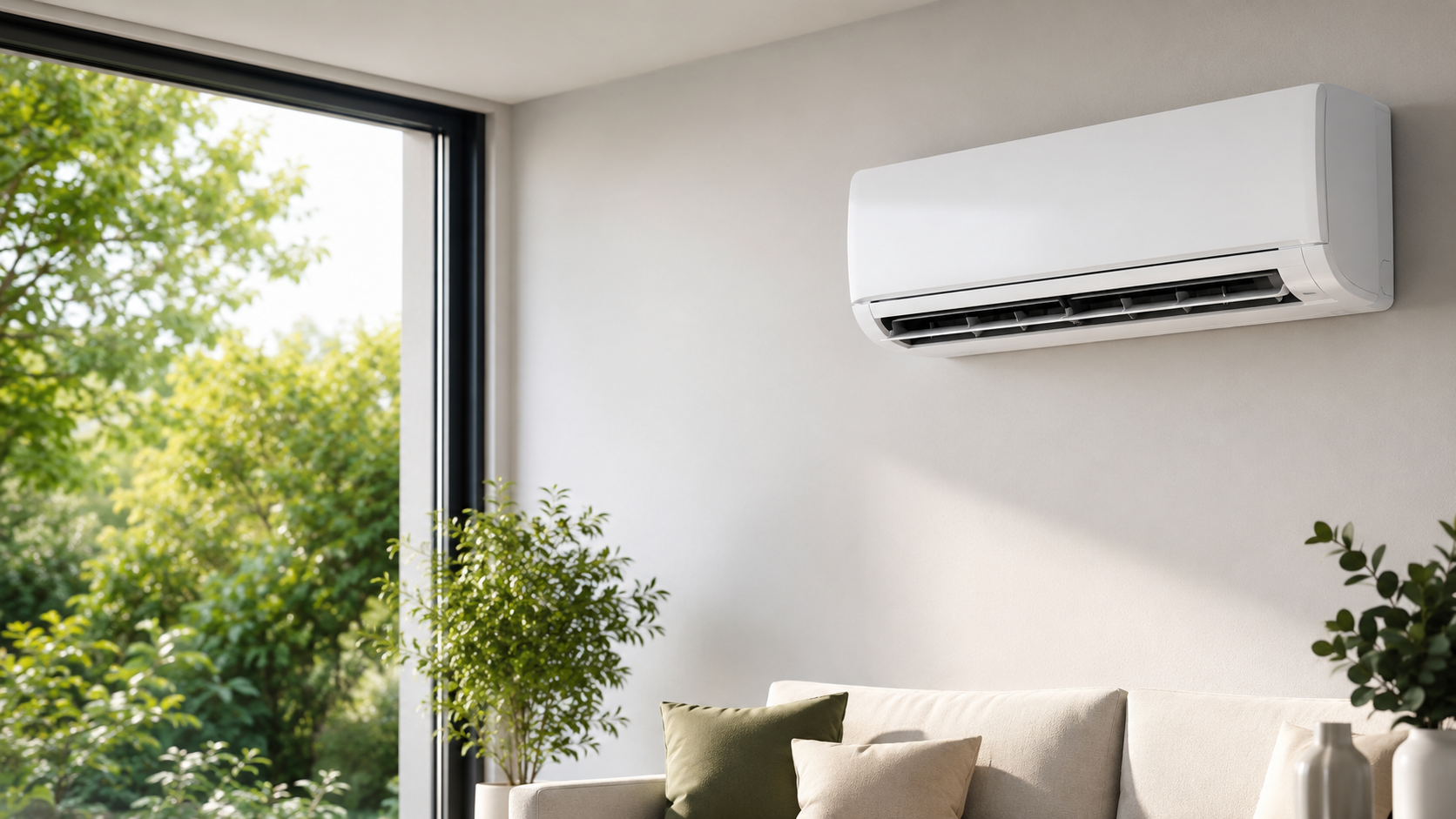
An inverter air conditioner uses a variable-speed compressor that adjusts output to match the room's actual heating or cooling need, instead of switching fully on or off. This keeps temperatures steady, lowers running costs and cuts noise. Most inverter air conditioners sold in Australia use this technology, per Sustainability Victoria.
A non-inverter air conditioner runs its compressor at one of two settings: fully on or completely off. It switches on at full power, reaches the set temperature, then shuts off, repeating this cycle all day. Non-inverter units cost less to buy but generally cost more to run.
Also Read: Who Is Eligible for the Victorian Government Air Conditioning Rebate
Both technologies do the same basic job of moving heat in or out of your home. Where they differ is in how they get there, and that shows up in your energy bills, your comfort and the lifespan of the unit. Here is how they compare across the factors that matter most to Victorian households.
1. Energy Efficiency
Inverter Air Conditioner: Inverter units are more efficient because the compressor draws only the power needed for the existing conditions. This shows up on the Zoned Energy Rating Label, where most high-star split systems use inverter compressors.
Non-Inverter Air Conditioner: Non-inverter units run at full power every time they switch on, even if only a small amount of cooling or heating is needed. This generally means a lower star rating for a similarly sized unit.
2. Electricity Consumption
Inverter Air Conditioner: Because the compressor scales its output up and down, an inverter aircon avoids the energy spikes that come with repeated full-power starts, which tends to reduce overall consumption.
Non-Inverter Air Conditioner: Constant full-power cycling means the compressor uses more electricity to reach and maintain the same set temperature, particularly on mild days when only gentle cooling or heating is needed.
3. Cooling Performance
Inverter Air Conditioner: An inverter aircon can ramp up quickly to cool a hot room, then settle into a lower, quieter output once it nears the set temperature, giving smoother performance overall.
Non-Inverter Air Conditioner: Cooling is delivered in bursts of full power. The room cools quickly at first, but temperature control becomes less precise once the set point is reached.
4. Heating Performance
Inverter Air Conditioner: A reverse-cycle AC inverter can maintain a steady heat output throughout winter, adjusting gradually as outdoor conditions change rather than surging on and off.
Non-Inverter Air Conditioner: Heating follows the same on-off pattern as cooling, which can make the room feel warmer than cooler in cycles rather than holding a constant temperature.
5. Temperature Consistency
Inverter Air Conditioner: Because the compressor fine-tunes its speed, room temperature typically stays within a narrow band of the thermostat setting.
Non-Inverter Air Conditioner: Temperature tends to swing a few degrees above and below the set point as the compressor switches fully on and then fully off.
6. Noise Levels
Inverter Air Conditioner: Because an aircon inverter rarely needs to run at maximum output for long, it's generally quieter than a standard unit, especially overnight.
Non-Inverter Air Conditioner: Full-power start-ups and shutdowns tend to be noisier, and the sudden change in sound each time the compressor cycles can be more noticeable.
7. Running Costs
Inverter Air Conditioner: Running costs vary with climate zone, star rating and hours of use, so treat any figure as a guide rather than a promise. Finder's analysis using the government Energy Rating Calculator put summer cooling costs at around $277 for an efficient reverse-cycle split system, against $209 for a cooling-only single split, over a normal 90-day Victorian summer. For a figure matched to a specific model, you can use the Energy Rating Calculator as the most trustworthy tool.
Non-Inverter Air Conditioner: Non-inverter units draw full power on every cycle, which generally pushes the star rating down and the running cost up compared to an inverter model of the same capacity, as reflected on the Zoned Energy Rating Label.
8. Maintenance
Inverter Air Conditioner: Inverter systems have more electronic components, so servicing can be slightly more involved, though routine filter cleaning and annual checks remain the same as any split system.
Non-Inverter Air Conditioner: The simpler mechanical design can mean fewer components to service, though the compressor itself experiences more stress from constant full-power cycling.
9. Lifespan
Inverter Air Conditioner: Normally, an inverter aircon can last for around 10 to 15 years. Because the compressor is not repeatedly forced from a standstill to full power, it experiences less mechanical stress, which can support a longer working life.
Non-Inverter Air Conditioner: On the other hand, non-inverter air conditioners have a general lifespan of 8 to 12 years. This is because frequent full-power starts place more strain on the compressor over time, which can shorten its working life compared to an equivalent inverter unit.
10. Environmental Impact
Inverter Air Conditioner: Lower electricity consumption generally means a smaller carbon footprint over the life of the system, particularly relevant as Victoria works to reduce emissions from gas heating.
Non-Inverter Air Conditioner: Higher energy use translates to a larger environmental footprint over time, even though the unit itself may use similar refrigerant to an inverter model.
You might also like: Daikin vs Mitsubishi Electric vs Panasonic: Best Ducted Aircon for Your Victorian Home.
Inverter vs Non-Inverter AC: What Should You Choose?
If you're installing a new split system in Victoria, choose an inverter aircon without a second thought.
Non-inverter units basically blast at full power until the room cools down, then switch off completely, then fire up again once it warms up. That start-stop pattern is what makes the temperature swing around and pushes your power bill up.
Inverters just don't work that way. They quietly adjust their running capacity to keep the temperature steady, which means less power is used and a lot less noise.
These days, most manufacturers are making inverter models, so you've got more options if you go that route. Non-inverter units are getting harder to come by in Victoria, and whatever you save by buying one upfront, you'll likely lose back in running costs down the track.
Inverter and non-inverter air conditioners both heat and cool your home, just in different ways. Inverter systems adjust to match demand, so you get steadier temperatures, quieter running and lower bills over time. Non-inverter units cost less upfront but use more power over the long run.
For most Victorian households running their air con regularly, an inverter split system air conditioner pays for itself through lower running costs and better comfort.
As a VEU Accredited Provider, we help you check your eligibility for the split system rebate Victoria offers, work out what your current system qualifies for and handle the paperwork that comes with an accredited installation. Get in touch with our team to talk through what the rebate could mean for your home.
You might also like: Current Victorian Government Rebates: Active, Inactive and Upcoming.
1. Is an inverter AC worth buying?
For most households using their air conditioner regularly, yes. The higher purchase price is usually offset over time by lower running costs and better temperature control.
2. Does an inverter AC save electricity?
Generally, yes. An a/c inverter avoids repeated full-power restarts, so it typically uses less electricity than an equivalent non-inverter model over the same period of use.
3. Is an inverter AC eligible for the Victorian rebate?
Many inverter reverse cycle split systems are eligible under the Victorian Energy Upgrades program, provided the model is listed on the VEU product register and installed by an accredited provider. Eligibility depends on the model rather than the inverter technology alone.
4. Can inverter air conditioners heat and cool?
Yes. Most inverter split systems sold in Australia are reverse cycle, meaning they can both heat your home in winter and cool it in summer.
5. How long do inverter compressors last?
Inverter compressors generally experience less mechanical stress than fixed-speed compressors, since they avoid frequent full-power starts, which can support a longer working life with regular servicing.