
Rinnai 13kW Ducted Air Conditioner Review
Major Benefits
Choosing a ducted air conditioner is rarely just about how quickly it can cool a house. Energy efficiency, heating performance, noise levels, smart controls, running costs, warranty coverage and even the availability of government incentives can all influence whether a particular system represents good value.
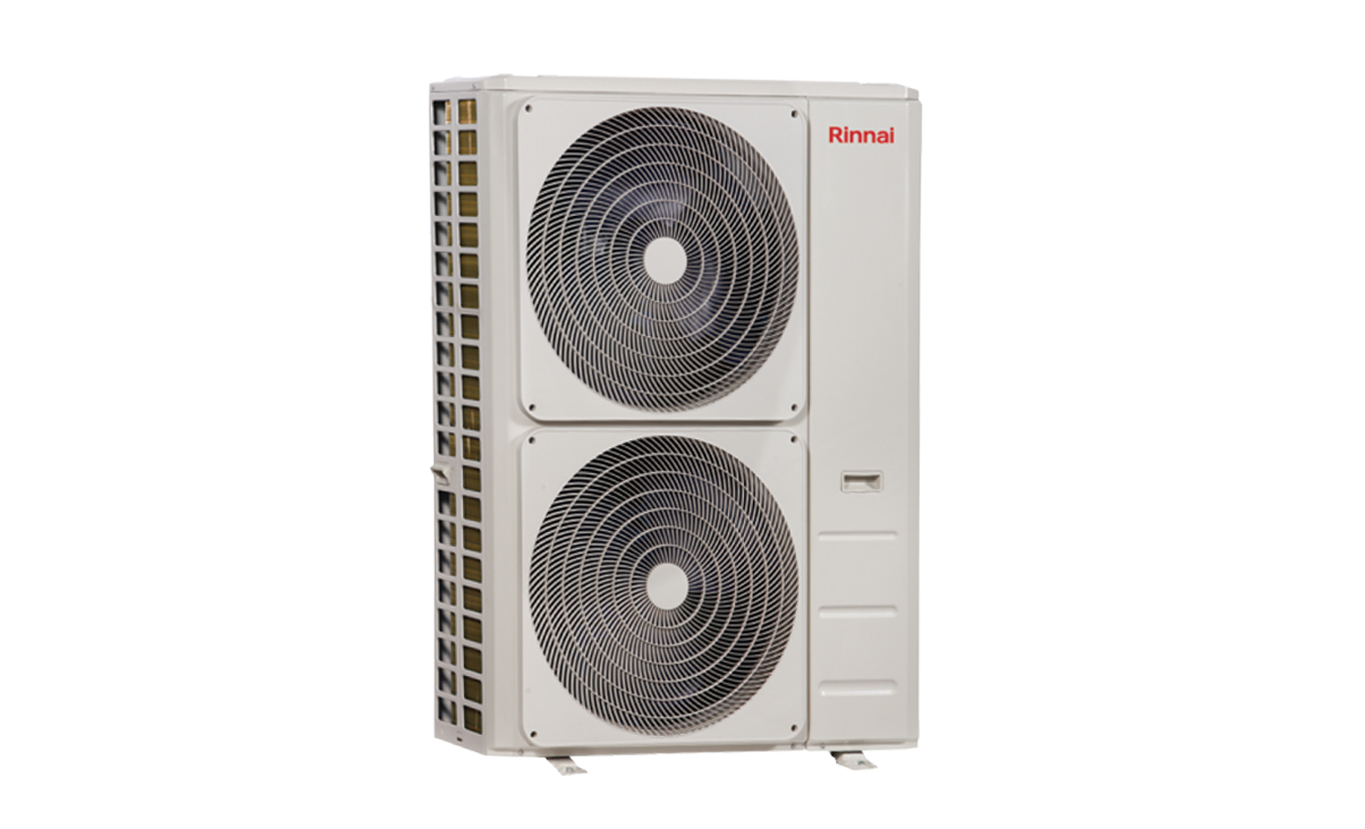
The Rinnai 13kW Ducted Reverse Cycle Air Conditioner (DINLR13B1 indoor unit / DONSR13B1 outdoor unit) sits within Rinnai's 7-18kW R32 ducted range, designed to heat and cool a mid-sized to larger Australian home from a single, concealed system. Across the range, Rinnai combines DC inverter technology, R32 refrigerant, a wired programmable controller with optional Wi-Fi, zoning for up to eight areas and a seven-year residential warranty.
But does the 13kW DINLR13B1 / DONSR13B1 deliver enough to compete with the established ducted systems in the Australian market?
In this Rinnai 13kW ducted review, we look beyond the headline features to examine its specifications, energy efficiency, comfort, smart functionality, installation considerations, warranty, potential drawbacks and overall value. We will also look at how a qualifying Rinnai ducted system may fit into the Victorian government air conditioner rebate.
Table of Contents
- About Rinnai and the Ducted DRCi Range
- Rinnai 13kW DINLR13B1 / DONSR13B1 Specifications
- Key Features of the Rinnai 13kW Ducted System
- Performance and Energy Efficiency
- Smart Controls, Zoning and Comfort
- Installation Considerations
- Warranty, Maintenance and After-Sales Support
- Rinnai 13kW Ducted System Pros and Cons
- Victorian Government Air Conditioner Rebate & Eligibility
- Why Choose EcoOrigin?
- Final Thoughts
- Frequently Asked Questions
Rinnai is a long-established heating and hot water brand in Australia and has expanded its product portfolio to include a range of reverse cycle ducted and split system air conditioners. The 13kW DINLR13B1 / DONSR13B1 sits within Rinnai's 7-18kW R32 ducted range (also marketed as the DRCi orDucted Reverse Cycle Inverter, line-up), which is positioned as a whole-of-home solution for Australian homes, from mid-sized properties through to larger family homes.
Rather than offering one ducted system for every application, the range is available in several capacities. The current line-up includes 7kW, 9kW, 11kW, 13kW, 15kW and 18kW models, with the 13kW unit sitting roughly in the middle of the range.
The 13kW model has a rated cooling capacity of 12.5kW and a rated heating capacity of 13.0kW, with an operating capacity range of approximately 4.2kW to 15.75kW in cooling and 4.44kW to 16.65kW in heating. Because a ducted system conditions multiple rooms at once, Rinnai's installers size these systems using a whole-of-home heat load calculation rather than a simple floor-area rule of thumb.
This range gives homeowners flexibility when matching capacity to the size and characteristics of their home.
However, floor area should not be the only consideration. Ceiling height, insulation, window area, orientation, shading, ductwork design and local climate can all affect the cooling and heating load. Rinnai itself recommends a proper heat load assessment by a qualified installer when selecting the appropriate capacity for a ducted system.
The 7-18kW range gives buyers a fairly broad capacity spread, but it's worth seeing where the 13kW model sits against its siblings before looking at its own numbers in detail.
Note: Energy ratings and capacities vary by model. Always check the current product specification sheet before purchase.
One interesting point here is that the 13kW model actually posts the highest AEER (3.6) of any capacity in Rinnai's 7-18kW ducted range, alongside a solid 4.1 ACOP for heating. In other words, the 13kW unit isn't just a mid-sized option by capacity. On the published figures, it's also one of the more efficient models in the ducted line-up in cooling mode.
For example, the 13kW DINLR13B1 / DONSR13B1 has a rated cooling capacity of 12.5kW at 3.45kW input power (18.2A) and a rated heating capacity of 13.0kW at 3.15kW input power (16.3A). Maximum input power to the outdoor unit is 7.0kW, drawing up to 31.0A, which typically calls for a 32A circuit breaker, an important detail for the electrician sizing the switchboard.
A quick note on model naming: Rinnai's current ducted catalogue also lists an updated "A" generation of this range (for example DINLR13B1A / DONSR13B1LA). The DINLR13B1 / DONSR13B1 covered in this review is the earlier-generation model code, which remains widely stocked and installed by Rinnai's accredited suppliers in 2026. It's worth asking your installer to confirm the exact model and revision being quoted, since specifications and VEU eligibility can differ slightly between generations.
The DINLR13B1 / DONSR13B1 combines several features that are now becoming increasingly important to Australian ducted air conditioner buyers.
- DC Inverter Technology: A twin rotary DC inverter compressor adjusts output according to heating or cooling demand, using Rinnai's 3D DC synchronisation to deliver a fast, controlled warm-up and cool-down rather than simply cycling on and off at full power.
- R32 Refrigerant: The system uses R32 refrigerant, which is widely used in modern residential air conditioning and has a lower global warming potential than the older R410A refrigerant found in previous-generation ducted systems.
- Wired Controller with Optional Wi-Fi: A wired programmable controller comes standard, with optional Wi-Fi control allowing the system to be operated remotely and integrated with compatible smart-home platforms.
- Zoning for Up to 8 Areas: The ducted system can condition the whole home at once or be zoned into individual areas, so unused rooms don't need to be heated or cooled.
- Slimline, Concealed Design: The indoor unit sits in the roof cavity, leaving only discreet ceiling diffusers visible. There's no wall-mounted indoor unit to work around.
- 'Filter Clean' Reminder: An adjustable-frequency reminder prompts filter cleaning, helping maintain airflow and efficiency over time.
- Sleep Timer and Scheduling: Sleep mode is intended to make overnight operation more comfortable and economical, while scheduling and favourites let the system follow a household's routine.
Energy efficiency is one of the more interesting aspects of the Rinnai ducted range because performance varies across the six available capacities.
The 13kW model carries an Annualised Energy Efficiency Ratio (AEER) of 3.6 in cooling mode and an Annual Coefficient of Performance (ACOP) of 4.1 in heating mode, both towards the stronger end of the 7-18kW range, where AEER figures span roughly 3.2 to 3.6 and ACOP figures span roughly 3.9 to 4.4 depending on capacity.
This highlights an important point when reviewing any ducted range: the headline "up to 3.4 star" efficiency claim quoted for the series as a whole doesn't automatically apply to every capacity. Buyers should look at the energy figures for the exact model they intend to install, rather than assuming the smallest or largest unit in the range sets the benchmark.
Inverter operation is another advantage. Once the target temperature is reached, the compressor can reduce its output rather than continuing to run at maximum capacity, which is reflected in the 13kW model's wide operating range of roughly 4.2kW to 15.75kW in cooling. Actual electricity consumption will still depend on factors such as outdoor temperature, insulation, ductwork condition, thermostat setting, electricity tariff and how the zoning is used.
Rinnai provides indicative energy figures for its ducted systems, but these should be treated as guides rather than guarantees because household conditions differ significantly.
For homeowners focused on reducing electricity consumption, selecting the correct capacity is therefore just as important as choosing an efficient model. An oversized or undersized ducted system may not deliver the expected balance of comfort and running costs.
The DINLR13B1 / DONSR13B1 is not simply focused on raw capacity. Its combination of zoning, controls and airflow features makes it a relatively flexible option within its segment.
The wired programmable controller allows day-to-day scheduling and temperature management, while optional Wi-Fi connectivity extends this to remote control from a smartphone, useful for adjusting the temperature before arriving home.
Zoning is arguably the standout comfort feature for a ducted system. With support for up to eight individual zones, the 13kW unit can condition the entire home at once orfocus heating and cooling on the rooms actually in use, which can help manage running costs in larger homes.
Airflow is rated at up to 1,050 L/s (high speed) against an external static pressure of 150Pa, with a maximum external static pressure capability of 200Pa, figures that matter to the installer designing the ductwork layout, but that ultimately translate into how evenly air is distributed to each outlet.
Moisture removal is rated at 3.0 L/h, which contributes to dehumidification during humid summer conditions.
Noise is another consideration. Rinnai lists indoor sound pressure at 1.4 metres of 46.5 / 43.5 / 40 dB(A) across high, medium and low fan speeds, with the outdoor unit rated at 60 dB(A) sound pressure at one metre. Because the indoor unit sits in the roof cavity, in-room noise is typically limited to airflow from the ceiling diffusers rather than the unit itself.
Real-world noise levels will naturally depend on the operating mode, ducting design and surrounding environment, but a roof-cavity ducted layout is generally quieter in the living space than an equivalent wall-mounted split system.
Selecting the 13kW capacity is only part of the process. Professional installation can have a major impact on performance, reliability and long-term running costs.
Before installation, homeowners should consider:
- Whole-of-home heat load: Capacity should be selected based on more than total floor area. Insulation, windows, ceiling height, orientation, solar exposure and the number of zones all matter.
- Roof cavity space: The indoor unit measures approximately 380 x 1200 x 625mm and weighs around 53kg, so there needs to be adequate roof cavity clearance and access for installation and future servicing.
- Outdoor unit location: The outdoor unit measures approximately 1333 x 952 x 415mm and weighs around 95kg. Adequate ventilation and clearance are important for efficient heat rejection.
- Electrical requirements: The 13kW model draws up to 31.0A, typically requiring a 32A circuit breaker. This should be checked against the home's existing switchboard capacity.
- Ductwork design and pipe length: Rinnai specifies a maximum refrigerant pipe length of 75m (minimum 3m) and a maximum vertical separation of 30m for the 13kW model, along with duct sizing based on the required airflow.
- Professional commissioning: Correct refrigerant handling, electrical connections, drainage and commissioning are essential for reliable operation and must be carried out by licensed tradespeople.
A qualified installer should carry out a heat load assessment and inspect the roof space before confirming the final model and ductwork design.
Rinnai backs the 13kW DINLR13B1 / DONSR13B1 with a 7-year residential warranty, which is a significant part of the ownership proposition and comfortably exceeds the 5-year minimum warranty required for VEU-eligible products.
However, warranty length should not be the only factor considered when evaluating a ducted air conditioner. Buyers should also consider who will install the system, how readily service can be arranged and how replacement parts and technical support are handled in their location.
Customer experiences with Rinnai's ducted range are mixed. Independent product reviews generally describe the brand as quiet, reliable and effective for whole-home comfort and many installers report strong track records with the DRCi ducted line-up. At the same time, a smaller number of reviews describe faults occurring within the first one to two years of use, alongside frustration over slow scheduling of warranty repairs. Because these are individual reports rather than a large, representative sample, they should be treated as data points to weigh alongside installer feedback rather than definitive evidence of overall reliability.
This is an important distinction in any product review. A handful of negative reviews cannot establish a failure rate on their own, but they do highlight the importance of considering after-sales support and installer reputation alongside the product specifications.
Routine maintenance remains important regardless of brand. Filters should be cleaned regularly, the indoor and outdoor units should be kept free from excessive dust and debris and professional servicing every 6 to 12 months can help identify drainage, refrigerant or airflow problems before they develop into larger issues. With regular servicing and correct installation, Rinnai's ducted systems are generally expected to deliver 12 to 15 years or more of service life.
Like any ducted air conditioner, the DINLR13B1 / DONSR13B1 has strengths and limitations worth considering before purchase.
Pros
- Strong AEER (3.6) and ACOP (4.1) relative to the rest of Rinnai's 7-18kW ducted range.
- Wide operating capacity range (approximately 4.2kW to 15.75kW cooling) for genuine part-load efficiency
- DC inverter twin rotary compressor with 3D DC synchronisation for fast temperature control
- R32 refrigerant
- Zoning for up to 8 individual areas
- Wired programmable controller with optional Wi-Fi and voice-platform compatibility
- Concealed, slimline roof-cavity design with discreet ceiling diffusers
- Seven-year residential warranty, ahead of the VEU 5-year minimum requirement
- Suited to whole-of-home comfort in mid-to-large Victorian homes
Cons
- Requires roof cavity space and a 32A circuit: not every existing switchboard or roof space will suit without upgrades
- A small number of customer reviews report faults and slower-than-expected warranty service.
- Exact performance depends heavily on correct sizing, ductwork design and installation quality.y
- The specific model code and generation (standard vs "A" series) should be confirmed with the installer, as this can affect VEU eligibility.
- Eligibility for government incentives depends on the specific model and installation circumstances.
Overall, the 13kW DINLR13B1 / DONSR13B1 makes the strongest case for buyers looking for a mid-to-large capacity ducted system that combines above-average efficiency for its range, flexible zoning and a long warranty, rather than buyers simply chasing the lowest sticker price.
For Victorian homeowners, the upfront cost of a new ducted air conditioner can potentially be reduced through the Victorian Energy Upgrades (VEU) program.
The Victorian Government currently offers heating and cooling discounts for eligible upgrades to efficient reverse cycle air conditioners, including ducted systems. For households replacing an existing ducted (whole-of-home) gas heater with an eligible ducted reverse cycle system, discounts can reach up to $5,530 for larger systems, while replacing a central electric resistance ducted heater can attract a discount of up to $5,460.
It is important not to assume that every Rinnai ducted model automatically qualifies orthat the maximum figure applies to every capacity.
*Indicative discounts published by the Victorian Government for household ducted upgrades. A 13kW system typically sits in or near the 10kW tier. Figures move with VEEC certificate pricing and are confirmed by your accredited provider before any work is booked.
To receive a VEU discount, the new system must be an approved high-efficiency reverse cycle air conditioner under the program and meet the applicable product and installation requirements. For residential installations, the approved system must also carry a minimum 5-year warranty, a threshold the 13kW Rinnai's 7-year warranty comfortably clears.
An important change is also coming for ducted systems specifically: from 30 September 2026, the minimum homeowner co-payment for ducted reverse cycle systems (and non-ducted systems of 10kW or more) is set to rise from $1,000 to $3,000 (including GST). Systems completed and accredited before this date remain under the current, lower co-payment. Homeowners weighing up a 13kW ducted upgrade may want to factor this timing into their planning.
This means homeowners considering a split system rebate in Victoria or ducted upgrade should confirm the exact Rinnai model against the current VEU product list before purchasing.
Who Can Be Eligible?
The current VEU heating and cooling guidance states that all Victorian households and businesses can be eligible for heating and cooling discounts, including private rental properties, subject to the relevant program requirements.
For household upgrades, the discount depends on what existing heating or cooling system is being replaced, the new system's capacity and the type of installation. If you are replacing an existing system, it generally needs to be more than two years old.
How the Rebate Works
The VEU process is designed to be managed through an accredited provider. The provider confirms whether the selected product is eligible, provides a quote incorporating the applicable discount, completes the installation or works with an approved installer and handles the required paperwork.
If you are comparing a Victorian government split system rebate against a ducted upgrade, it is worth checking eligibility before installation rather than assuming a rebate can be claimed retrospectively.
The Victorian Government also advises customers to engage an accredited provider before undertaking an upgrade, as retrospective rebates can be more difficult to arrange and may not always be available.
What About the Rinnai 13kW Ducted System?
The key consideration is the specific model number and generation, not simply the general "Rinnai ducted" name.
Before committing to an installation, ask your accredited provider to confirm:
- Whether the exact model (DINLR13B1 / DONSR13B1 orthe updated "A" series equivalent) appears on the current VEU approved-product list
- Whether your existing heating or cooling system satisfies the replacement requirements
- What discount applies to your particular upgrade and whether the 30 September 2026 co-payment change affects your timing
- Whether the installation arrangement meets VEU requirements
- What your final out-of-pocket cost will be after the discount
This is the safest way to determine whether you can access an air conditioner rebate Victoria homeowners may be eligible for.
Choosing the right ducted air conditioner is only one part of an efficient home upgrade. Correct sizing, professional installation and access to applicable incentives can make a significant difference to the overall value of the project.
EcoOrigin helps Victorian homeowners navigate the process from system selection through to installation and available energy-upgrade incentives.
Our team can help assess your property, identify an appropriately sized ducted or split system, check applicable VEU eligibility and coordinate professional installation.
If you are considering a Victorian government air conditioner rebate ahead of the 30 September 2026 co-payment change, working with an accredited provider can also help you move through eligibility and paperwork sooner rather than later.
For homeowners comparing different ducted options, our review of the Rinnai 18kW DINLR18B1 / DONSR18B1 covers Rinnai's largest single-phase ducted model for larger homes, while EcoOrigin can provide guidance based on your home's requirements rather than simply recommending a particular capacity or model.
The Rinnai 13kW DINLR13B1 / DONSR13B1 is a well-equipped ducted system that combines DC inverter technology, R32 refrigerant, wired and Wi-Fi control, zoning for up to eight areas and a seven-year residential warranty.
Its biggest strength is arguably its balance of capacity and efficiency. Sitting mid-range within Rinnai's 7-18kW ducted line-up, the 13kW model posts the highest AEER of any capacity in the range, while its wide operating range supports genuine part-load efficiency across a mid-to-large Victorian home.
At the same time, the 13kW ducted system is not without considerations. It requires adequate roof cavity space and a 32A electrical circuit; a small number of customer reviews describe faults and slower warranty service and the right outcome depends heavily on correct sizing and ductwork design. Buyers should also confirm whether they are being quoted the standard DINLR13B1 / DONSR13B1 or the newer "A" series equivalent, since this can affect rebate eligibility.
For Victorian homeowners, potential VEU incentives can further improve the value proposition, but eligibility and the exact discount should always be confirmed for the specific model and installation circumstances before work begins, particularly with the ducted co-payment increasing from 30 September 2026.
Overall, the Rinnai 13kW ducted system is worth considering for homeowners who want a feature-rich, whole-of-home reverse cycle solution, particularly when the capacity matches the property and the installation is carried out correctly.
If you're considering a Rinnai 13kW ducted installation in Victoria, EcoOrigin can help you determine the right system for your home and check whether you may qualify for the available Victorian government air conditioner rebate.
1. Is the Rinnai 13kW DINLR13B1 / DONSR13B1 a good ducted air conditioner?
It offers DC inverter technology, R32 refrigerant, zoning for up to 8 areas, Wi-Fi-ready control and a seven-year residential warranty, with an AEER of 3.6, which is the highest in Rinnai's 7-18kW ducted range. Its suitability ultimately depends on your home's heat load, ductwork design and installation quality.
2. What size home suits the Rinnai 13kW ducted system?
The 13kW model has a rated cooling capacity of 12.5kW and an operating range of roughly 4.2kW to 15.75kW, making it suited to mid-to-large homes. A qualified installer should confirm sizing using a whole-of-home heat load calculation rather than floor area alone.
3. Does the Rinnai 13kW ducted system have Wi-Fi?
Yes, the DINLR13B1 / DONSR13B1 supports optional Wi-Fi control in addition to its standard wired programmable controller and is compatible with major voice-assistant platforms.
4. Can I get an air conditioner rebate for a Rinnai 13kW ducted system in Victoria?
Potentially. Eligibility depends on the exact Rinnai model and generation, its approval under the Victorian Energy Upgrades program and the circumstances of the installation. Note that the minimum co-payment for ducted systems is scheduled to rise from $1,000 to $3,000 from 30 September 2026, so timing can affect your out-of-pocket cost. An accredited provider should confirm eligibility before installation.
5. How long is the Rinnai 13kW ducted system warranty?
Rinnai currently lists a 7-year residential warranty for the DINLR13B1 / DONSR13B1, which exceeds the 5-year minimum required for VEU eligibility. Warranty terms and conditions should be checked before purchase and installation.